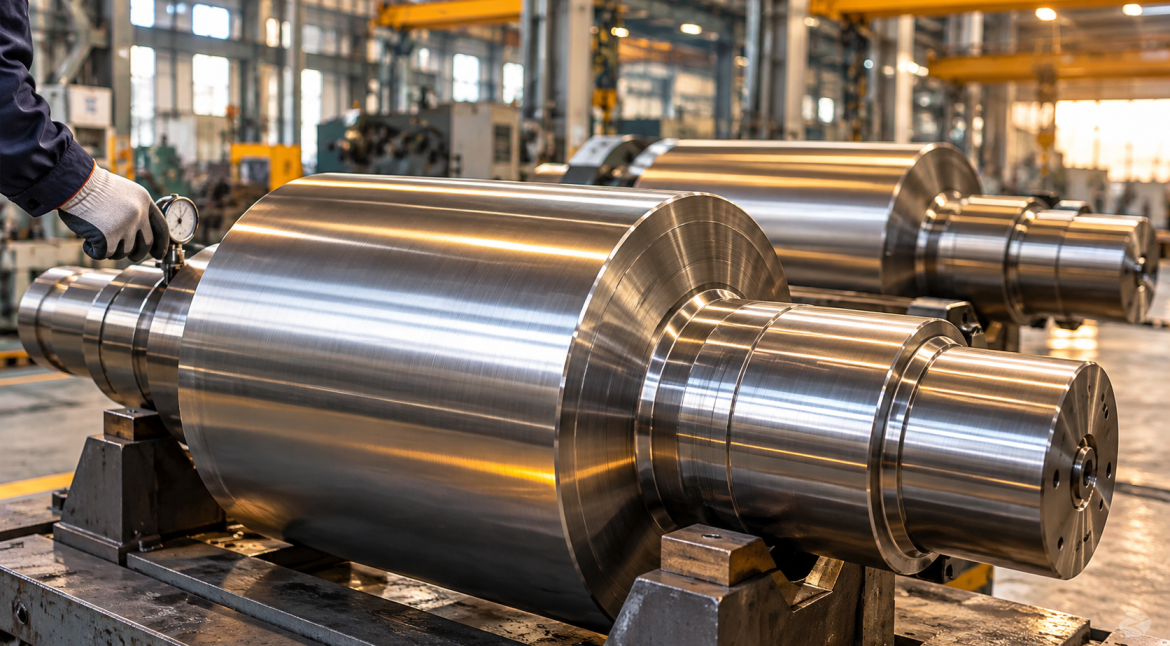
Selecting the right steel mill roll is essential for maintaining product quality, production efficiency and reliable rolling mill operation. An unsuitable roll can increase downtime, cause surface defects and raise maintenance costs. Steel manufacturers should therefore evaluate both the operating conditions and the technical characteristics of the roll before placing an order.
Understand the Rolling Application
The first step is to identify where the roll will be used. Different applications—such as roughing mills, intermediate stands, finishing mills, bar mills, wire rod mills and section mills—require different roll materials, hardness levels and mechanical properties.
Important information includes:
Mill type and stand position
Rolled material and finished product
Roll dimensions and drawing
Working temperature
Rolling speed and load
Required hardness and hardness depth
Cooling conditions
Previous roll performance
Select the Appropriate Roll Material
Steel mill rolls are manufactured from different materials depending on their application. Common options include cast iron rolls, alloy cast steel rolls, forged steel rolls, high-chromium rolls and high-speed steel rolls.
The correct material should provide a suitable balance of wear resistance, strength, toughness and resistance to thermal cracking. Selecting a roll based only on price may result in shorter service life and higher overall production costs.
Review Previous Performance
A mill’s operating history provides valuable information. Before selecting a replacement roll, users should review the performance of the existing roll, including campaign life, wear pattern, surface condition and reason for replacement.
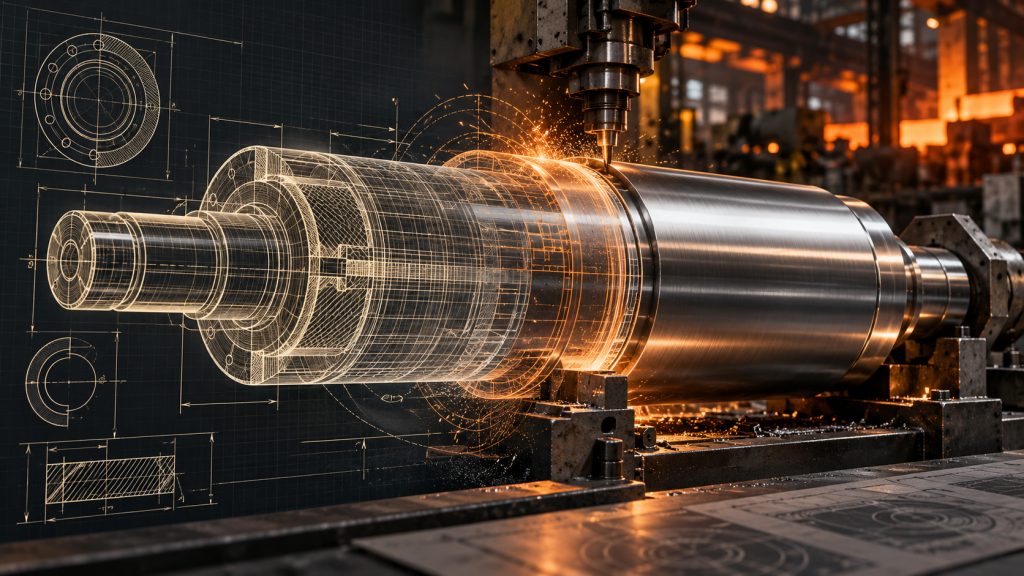
Photographs, drawings, inspection reports and operating data help manufacturers recommend a technically suitable solution.
Verify Quality and Documentation
Reliable roll suppliers should provide appropriate technical documentation, including material specifications, dimensional inspection records, hardness reports and relevant test certificates.
The roll should also be inspected against the approved drawing before shipment. Proper quality control reduces the risk of dimensional mismatch and unexpected failure during operation.
Consider Total Operating Cost
The lowest-priced roll is not always the most economical choice. Mills should consider service life, downtime, maintenance requirements, product quality and production loss when comparing offers.
A technically suitable roll with a longer campaign life can deliver a lower cost per tonne of rolled product.
Steel Mill Roll Supply in Bangladesh
Loyal Road Inc. supplies steel mill rolls and related metallurgical equipment for steel plants and rolling mills in Bangladesh. We work with experienced international manufacturers to provide rolls according to customer drawings, technical specifications and operating requirements.
Our scope also includes copper mould tubes, graphite electrodes, refractory materials, mill stands and other critical mechanical spares.
For a technical evaluation or quotation, please send your roll drawing, application details, required quantity and available operating data to Loyal Road Inc.